Aircraft Maintenance Engineering (AME)
Colleges in Bangalore
We’d love to hear you and let you the perfect career solution

Why Bangalore Is an Exceptional Choice for AME Training?
Bangalore, renowned as India’s “Silicon Valley,” is rapidly gaining recognition as a premier destination for Aircraft Maintenance Engineering (AME). Home to Kempegowda International Airport, one of the country’s busiest gateways, handling over 41 million passengers annually, Bangalore offers a dynamic aviation ecosystem where students witness complex aircraft operations daily. The city’s robust network of airlines, ground-support services, and Maintenance, Repair & Overhaul (MRO) facilities fosters an environment rich in practical learning. Furthermore, proximity to major aerospace manufacturers like Hindustan Aeronautics Limited (HAL) ensures that AME colleges in Bangalore maintain strong industry linkages, guest-speaker series, and internship opportunities that bridge classroom theory with real-world maintenance challenges.
Leading DGCA-Certified AME Colleges in Bangalore
Academy of Aviation & Engineering
Located at Prestige Enclave, Bettahalasur Cross on National Highway 7, the Academy of Aviation & Engineering stands out as a DGCA CAR-147–approved institution offering both B1 (Aeroplane Turbine) and B2 (Avionics) streams. Here, students gain hands-on experience with live aircraft systems in PCA-certified hangars and avionics labs equipped with radar simulators and instrumentation benches. The program’s well-structured curriculum integrates interactive workshops, industry-driven projects, and regular site visits to Kempegowda International Airport’s maintenance bays, ensuring graduates leave with not just a license but the confidence to tackle any maintenance scenario.
Hindustan Aviation Academy
Situated in Marathahalli, Hindustan Aviation Academy has rapidly carved a niche for itself among AME colleges in Bangalore. Approved for B1.1 (Aeroplane Turbine) and B2 (Avionics) modules, the academy emphasizes small-batch instruction and personalized mentorship. Students work directly on piston and turbine engine mock-ups, practice composite repair techniques, and participate in diagnostic exercises using authentic aircraft components. Strong partnerships with local MROs mean six-month on-the-job training placements—complete with stipends—are seamlessly integrated into the three-year course, fostering both technical.
VSM Aerospace AME Training School
At Yelahanka New Town, VSM Aerospace AME Training School offers a comprehensive three-year DGCA CAR-147 program covering B1.1, B2, and B1.3 (Helicopter Turbine) streams. Boasting an expansive campus hangar that houses both fixed-wing and rotary platforms, VSM provides immersive, real-aircraft maintenance labs where students dismantle, inspect, and reassemble actual engine and avionics systems. The school’s state-of-the-art composite workshop and virtual-reality diagnostic center simulate complex fault-finding scenarios, while its alum network spanning IndiGo, Air India, and major private MROs ensures robust placement support upon graduation.

Are you Looking for an Aviation Career?
Choosing the Right AME College in Bangalore
When comparing AME colleges in Bangalore, prioritize:
- DGCA CAR-147 Approval: Mandatory for legal licensure in B1 and B2 disciplines.
- Live Aircraft Access: Institutions with real-aircraft hangars deliver deeper practical skills than simulation-only centers.
- Industry Immersion: Strong MRO partnerships guarantee meaningful six-month apprenticeships and stipends.
- Faculty Expertise: Instructors with extensive field experience mentor students through complex maintenance tasks.
- Placement Track Record: High graduate employment rates with leading airlines and MRO firms signal institutional credibility.
AME Course Structure: 3 Years to Licensing
The AME curriculum in Bangalore follows a phased approach:
Year 1 – Foundations & Observations
Core concepts in aerodynamics, aircraft structures, powerplant fundamentals, and basic avionics are introduced alongside guided visits to airport MRO bays and manufacturer facilities.
Year 2 – Intensive Practicals
Students delve into engine overhauls, turbine inspections, avionics calibration, and composite repairs. Collaborative workshops with HAL and private MRO centers hone troubleshooting abilities on live systems.
Year 3 – Licensure & Apprenticeship
The final year focuses on DGCA-mandated module examinations and a compulsory six-month on-the-job training placement. Apprentices earn stipends (₹15,000–20,000/month) as they apply their skills to real maintenance projects under qualified supervisors. Successful completion awards the DGCA AME license in chosen streams.
Eligibility & Admission Process
Aspiring technicians must meet these requirements:
Educational Qualification
- 10+2 with Physics, Chemistry & Mathematics (≥ 50% aggregate)
- OR a three-year diploma in Mechanical/Electrical/Electronics Engineering
Medical Fitness
- Valid DGCA Class II medical certificate
Application Steps
- Complete the online registration form on the college website.
- Submit academic transcripts, a medical certificate, and identity proofs.
- Attend a technical interview or counseling session.
- Finalize seat confirmation with the initial fee payment.
Early applications are encouraged due to limited seats and high demand.
Fee Structure & Financial Support
Program fees for a combined B1 and B2 course at Bangalore AME colleges typically range between ₹6 lakh and ₹7 lakh, inclusive of DGCA exam charges and basic tool kits. Financial assistance options include:
- Merit Scholarships: Awarded to top performers, covering up to 100% tuition fees.
- Education Loans: Specialized aviation loans from banks (e.g., SBI Aviation Loan) with tenures up to 15 years.
- Apprenticeship Stipends: Monthly allowances during OJT placements help offset accommodation and living costs.
Prospective students should consult each institution’s admissions office for exact fee breakdowns and scholarship application deadlines.
State-of-the-Art Infrastructure & Industry Collaborations
Bangalore’s leading AME colleges feature:
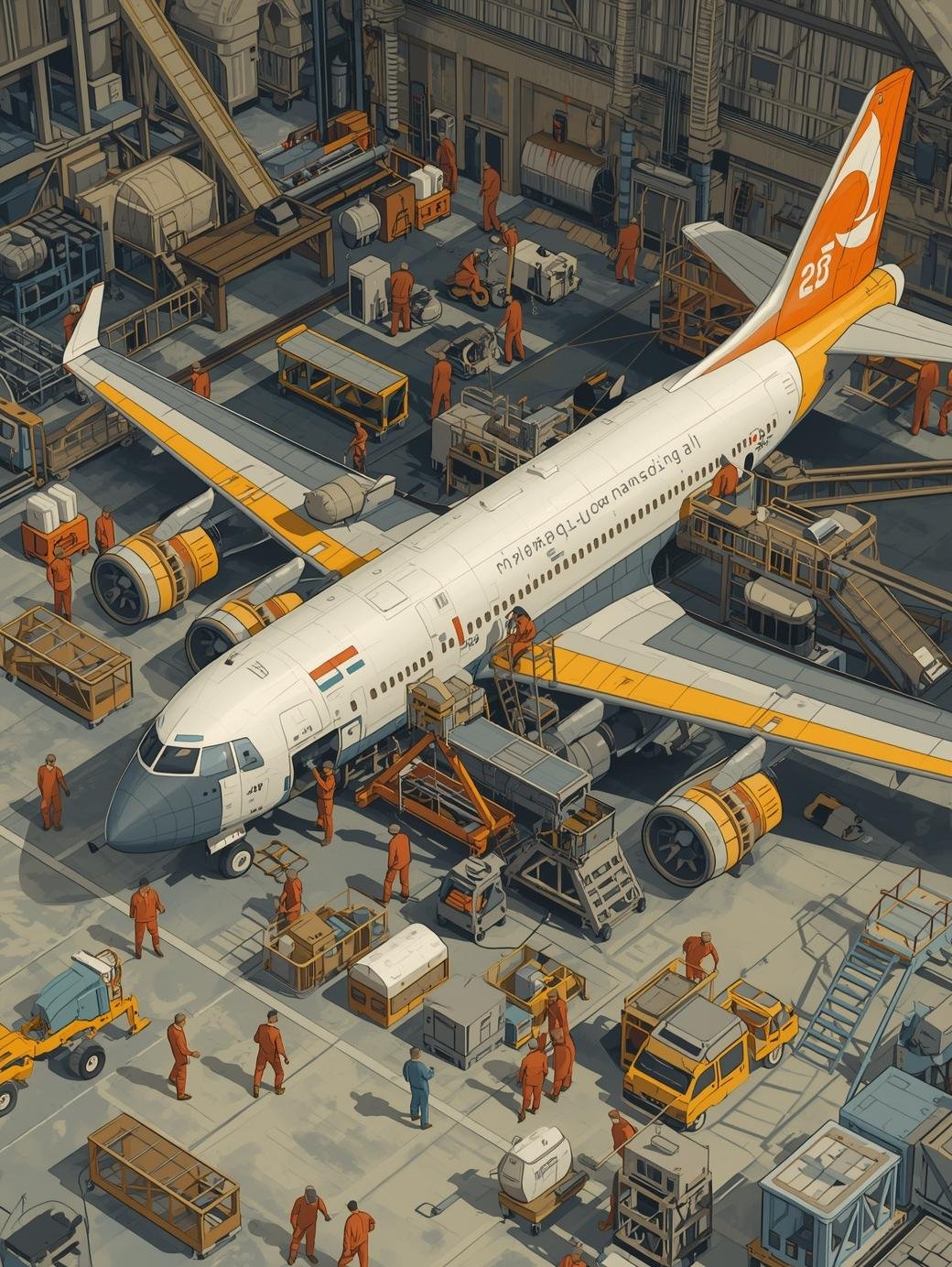
- PCA-Certified Hangars: Spacious bays housing both fixed-wing and rotorcraft platforms for live maintenance practice.
- Avionics Test Labs: Equipped with radar and navigation simulators, instrument calibration benches, and electrical systems rigs.
- Composite & Sheet-Metal Workshops: Dedicated spaces for carbon-fiber repairs, advanced alloy welding, and structural restorations.
- Virtual-Reality Diagnostic Centers: High-fidelity simulators replicating system faults on Airbus A320, Boeing 737, and rotorcraft.
Regular guest lectures by HAL engineers and site visits to Kempegowda Airport’s MRO facilities keep the curriculum aligned with evolving industry standards.

Why Train as an AME in Bangalore?
1. Expanding Aviation Hub
Rapid airport growth and new airline routes translate to abundant maintenance opportunities.
2. Robust Industry Ecosystem
Proximity to HAL, private MROs, and airline maintenance divisions fosters strong institutional partnerships.
3. Cost-Effective Living
Competitive training fees and relatively affordable urban living expenses compared to other metros.
4. High Placement Rates
Graduates secure roles with top carriers, third-party MROs, and defense maintenance organizations.
5. Future-Ready Careers
With India projected to need over 70,000 AME technicians by 2035, demand for licensed engineers remains strong.