Who Is a Pilot?
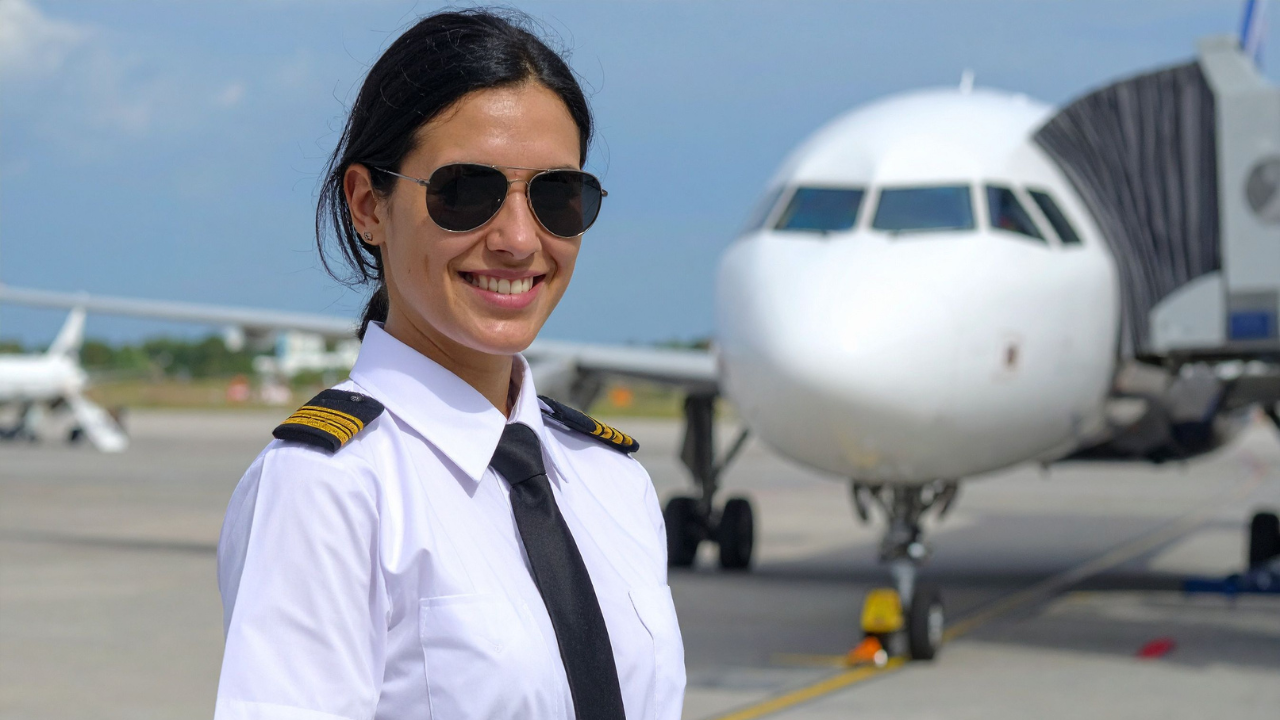
An aircraft pilot is a person who controls the flight of an aircraft by operating its directional flight controls. A pilot is a person who flies the aircraft, he/she is someone who is in the aviation industry, and who is able to operate aircraft in order to transport passengers or goods. The type of aircraft used depends on the pilot’s specialization.

International Aviation Scholarship and Aptitude Test (IASAT) 2026
REGISTRATIONS STARTING FROM 01 OCTOBER 2025
Make Your Dream Come True. ENROLL NOW!!
Scholarship Exam For All The Students Pursuing Higher Education

Commercial Pilot License (CPL)
An aircraft pilot is a person who controls the flight of an aircraft by operating its directional flight controls. A pilot is a person who flies the aircraft, he/she is someone who is in the aviation industry, and who is able to operate aircraft in order to transport passengers or goods.
The type of aircraft used depends on the pilot’s specialization. Some pilots fly helicopters while others fly larger commercial aircraft to transport tens or even hundreds of passengers. Other pilots fly cargo planes to move large amounts of mail, automobiles, industrial equipment and other goods from one area to another.
Civilian pilots fly aircraft of all types privately for pleasure, charity, or in pursuance of a business, or commercially for non-scheduled (charter) and scheduled passenger and cargo air carriers (airlines), corporate aviation, agriculture (crop dusting, etc.), forest fire control, law enforcement, etc. When flying for an airline, pilots are usually referred to as airline pilots, with the pilot in command often referred to as the captain. There were 290,000 airline pilots in the world in 2017.
Get free counselling from our aviation experts

Why to become a Pilot?
Every people work on land, be unique and work in sky… Becoming a pilot makes you a better planner decision maker; you will learn to be patient, with sense of urgency. They tend to be realistic individuals, which mean they’re independent, stable, persistent, genuine, practical, and thrifty. They like tasks that are tactile, physical, athletic, or mechanical. Some of them are also investigative, meaning they’re intellectual, introspective, and inquisitive. Eligibility criteria: Candidate should pass 10+2 with Physics, Chemistry and Math from any recognised board. Adequate competency in the English Language is required. Pilots must have normal color vision, distance acuity no worse than 20/70 in each eye correctable to 20/20, near vision 20/20 without correction, and meet other refraction and astigmatism requirements. Corrective eye surgery may also disqualify applicants for pilot or other specific roles. Minimum age – 17 years.
To become a pilot, you have to go through a Medical Examination which can only be done by DGCA approved Doctors.
Note: It is mandatory to clear both Medical Exams to become a pilot.
Get Approved by CLASS I, before Issuing you CPL license.
Get Approved by CLASS II, before joining any Flying Training School.
Process of Commercial Pilot License
As you start you training, your particular Academy takes Ground Classes and conduct Oral Exams/ Interview. As you clear that oral exam, they issue your Student Pilot License (SPL). Same like SPL you academy takes classes for Flight Radio Telephony Operation License (FRTOL) and after exam DGCA issue the FRTOL license. To be a CPL holder in India you need to clear all license paper and you have to complete 200hrs of flying on both single engine aircraft and multi-engine aircraft.

Subject Papers
1) Air Regulation
2) Air Navigation
3) Aviation Meteorology
4) Technical General (Aircraft and Engines)
DGCA conducts online exams for CPL License Passing 70%
Types of Licenses
1) Student Pilot license (SPL)
2) FRTOL
3) Radio Telephony Restricted. (RTR)
(The Department of Telecommunications of the Govt.of India conducts the Test for Radio Telephony Restricted License, as per published schedule).
4) Commercial Pilot License (CPL).
Eligibility
1. Class Xth passed
2. Cleared Class II Medical Exam by Aviation Authority Approved Medical Examiners.
3. Should be the age of 16 yrs and above
Commercial Pilot Training in Abroad
The standard of pilot training overseas will be of a higher grade. The facilities and maintenance of aircraft will be of world class. Training will be given by experienced and competent flight instructors. The CPL training has been integrated with Multi Engine raining. Instrument flying provided will be of the highest standard. The training is based on DGCA standard and requirement. The students trained abroad can easily pass the DGCA conversion examination. Even though there are institutes in India which offer pilot training, the number of these institutes does not meet up the demands of the aviation sector as a whole. Despite the swelling aviation sector, commercial Pilot Training Institutes in India are in their initial stage. Thus, most of the Indian students aiming to receive commercial Pilot Training usually go abroad. They seek for quality training from skilled instructors outside India to obtain the Commercial Pilot License.
There are 3 major advantages in opting for an overseas flight training school:
1. Technology advantage
2. Time advantage
3. Intensity Advantage
To elaborate further, the training facilities in foreign flight schools are years ahead in sophistication. The teaching methodology is current with modern equipments. The airport infrastructure is definitely better than what is prevalent in India. Even though India is up-grading the airports, it still has a long way to catch up. Gaining access to facilities like a Flight Simulator during training can only be a dream here. But the leading schools in overseas provide that experience too! Coming to the aspect of time, due to the lack of infrastructure & aircrafts for training and with the shortage of Certified Flight Instructors in India, a pilot aspirant has to endure a training period of almost 3 years.
Whereas it is just 15 months in US or few months in Canada or 10 months in Philippines! One of the factors for time saving is also the intensity of teaching. Due to the availability of more trained Pilot Instructors, the Trainee to Instructor ratio is high. This translates into personalized and focused training sessions which are highly intensive. To sum it up, choosing a foreign training school is a smart! Get qualified better and faster. Start earning earlier!
PPL
The PPL is the initial start to your career in Aviation. This allows you to do private flights, and to train further for a Commercial Pilot License (CPL) in order to work commercially as a pilot. Extensive training is done on full time basis. Applicant will get PPL after 42-50 Hours of flying.
Instrument Rating (IR)
An Instrument Rating (IR) is the Rating that will allow you to fly in Instrument Meteorological Conditions (IMC). These are conditions of poor visibility, low cloud base and generally adverse weather. The Rating qualifies you to fly an Aircraft relying solely on its Flight Instruments. Commercial Pilot License (CPL) Your training continues with a commercial single-engine certificate, which takes you into the world of flying professionally. Next up is a commercial multi-engine rating. Having a multi- engine rating allows pilots to start training on specific commercial aircraft, including larger jets used by airlines. The next step for most pilots is to become a Certified Flight Instructor (CFI). Being a CFI provides you with a number of advantages: you can earn money while you continue to perfect your pilot skills all while building flight hours to meet minimum airline hiring requirements. Pilots in the United States must have 1,500 flight hours before they are eligible to receive their Airline Transport Pilot (ATP) certificate. Don’t forget about sightseeing, banner towing, crop-dusting or surveying flights, too.