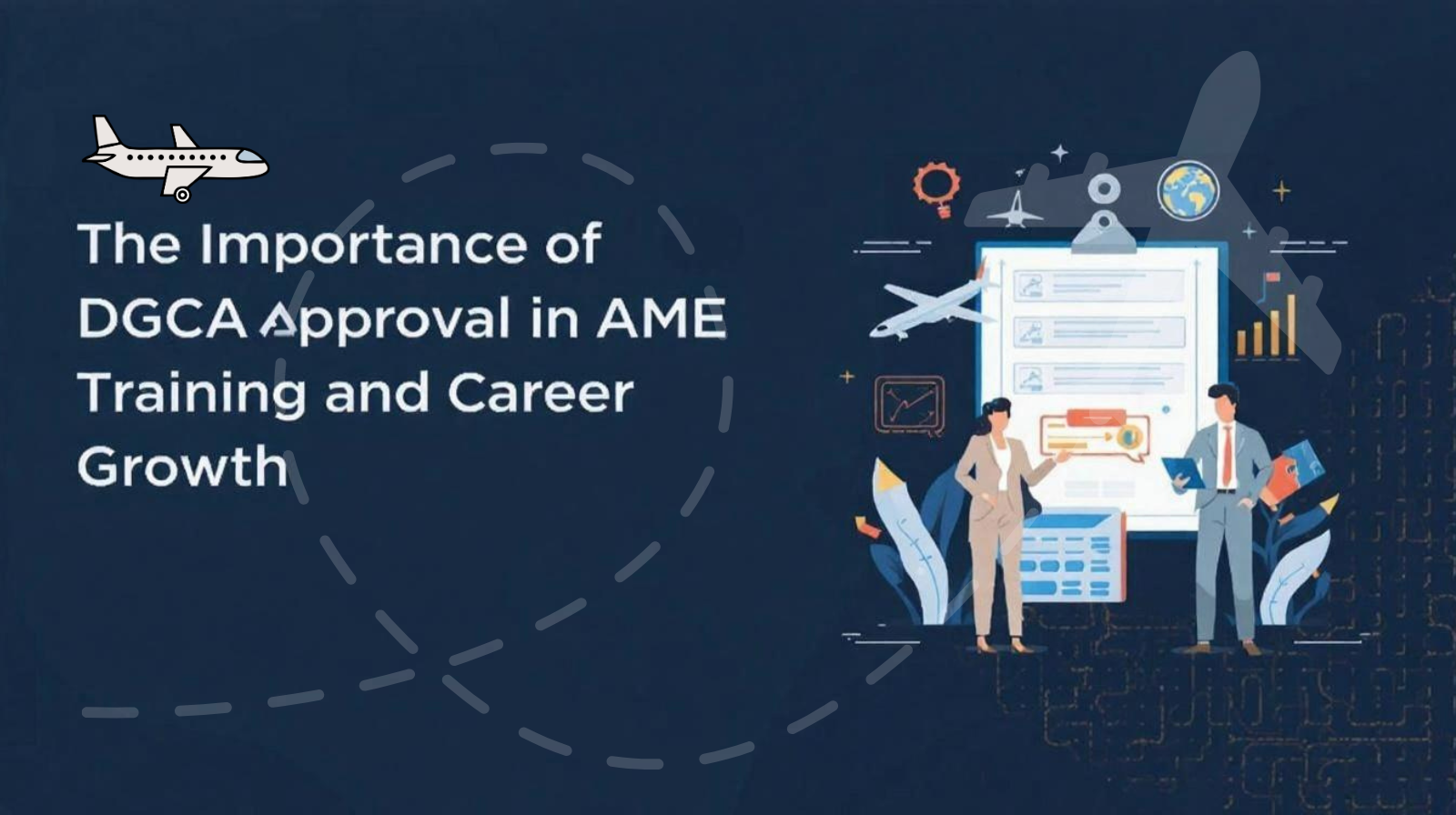
The Importance of DGCA Approval in AME Training and Career Growth
- AME
- October 14, 2025
If you’re passionate about aviation and dream of working on aircraft, Aircraft Maintenance Engineering (AME) could be the perfect career path for you! Before you sign up for any AME course, there’s one important thing to check: DGCA approval. Think of it as the first step toward a successful and exciting aviation career.
What Is DGCA?
The DGCA, or Directorate General of Civil Aviation, is India’s main authority for civil aviation. It oversees safety, licensing, and standards for everyone in the aviation industry. The DGCA makes sure that pilots, aircraft, and engineers all follow strict safety and operational rules.
Understanding AME (Aircraft Maintenance Engineering)
An Aircraft Maintenance Engineer is the professional who ensures an aircraft is airworthy. Unlike pilots, who fly the plane, AMEs maintain and inspect it. They handle everything from mechanical repairs to avionics systems, ensuring compliance with aviation regulations.
The Role of DGCA in Aviation Training
DGCA is essential for certifying and monitoring aviation training organizations. Without DGCA oversight, there is no assurance of quality, safety, or international recognition in training standards.
Why DGCA Approval Matters in AME Training
DGCA approval means an institute meets all national safety, training, and infrastructure standards. This certification ensures that students’ education aligns with real-world aviation requirements and global benchmarks.
In short, DGCA approval is essential for starting a real career in aviation.
Standards and Regulations Set by DGCA
DGCA lays down strict rules regarding:
- Curriculum structure
- Qualified instructors
- Training equipment and simulators
- Safety protocols
- Examination and licensing systems
These regulations ensure every AME graduate possesses the technical and practical knowledge necessary for the job.
DGCA-Approved vs. Non-Approved Institutions
Degrees from institutes that are not approved by the DGCA are not valid for AME licensing in India. Graduates from these institutes often face limited job options and cannot take the DGCA licensing exams.
In contrast, DGCA-approved institutes open doors to reputable airlines, MROs (Maintenance, Repair, and Overhaul organizations), and even global aviation companies.
How DGCA Approval Enhances Learning Quality
DGCA-approved institutes provide:
- Modern labs and hangars are equipped with real aircraft components.
- Industry-oriented curriculum tailored to aviation standards.
- Regular inspections ensure top-notch training delivery.
- Practical exposure through tie-ups with airports and airlines.
This means you gain practical experience with real aircraft systems, not just classroom knowledge.
Eligibility Criteria for DGCA-Approved AME Programs
To enroll in a DGCA-approved AME course, you generally need:
- 10+2 qualification with Physics, Chemistry, and Mathematics
- At least 45–50% marks in aggregate
- Medical fitness certificate from a DGCA-approved doctor
These criteria help maintain high training and safety standards.
Licensing and Certification Process
After completing a DGCA-approved AME program, candidates must clear DGCA’s licensing examinations. Once licensed, they can certify aircraft for flight, a responsibility that carries immense prestige and accountability.
Career Benefits of Training Under DGCA-Approved Institutes
Here are some career perks:
- Eligibility for the AME License issued by DGCA
- Priority in airline and MRO recruitments
- Better international recognition
- Access to higher salaries and promotions
- Opportunities in both private and government sectors
Your DGCA-approved certification acts as a powerful professional credential.
International Recognition and Job Opportunities
DGCA licenses are recognized by several international aviation authorities, allowing Indian AMEs to work abroad with additional validation or conversion. With global airlines seeking skilled engineers, DGCA-approved graduates enjoy strong employment prospects.
DGCA’s Impact on Aviation Safety Standards
Every aircraft’s safety depends on how well it’s maintained. By enforcing rigorous training and licensing rules, DGCA ensures that only competent, certified professionals handle aircraft maintenance, directly influencing national aviation safety.
Challenges Faced by Non-Approved Institutes
Non-approved institutes often:
- Lack of certified trainers and proper labs
- Offer outdated curricula
- Produce graduates who can’t obtain official AME licenses.
These limitations make DGCA approval the non-negotiable benchmark for serious aviation aspirants.
How to Verify if an Institute Is DGCA-Approved
Before applying, visit the official DGCA website and check the list of approved AME training organizations. Always confirm details like institute name, location, and course type—this simple step protects your future.
Top DGCA-Approved AME Institutes in India
Some renowned DGCA-approved AME institutes include:
- Indian Institute of Aeronautics, New Delhi
- Hindustan Institute of Engineering Technology, Chennai
- Rajiv Gandhi Aviation Academy, Hyderabad
- Alpine Institute of Aeronautics, Dehradun
- Sha-Shib Group of Institutions
These colleges offer high-quality infrastructure, strong industry connections, and impressive placement records.
Tips for Choosing the Right AME Institute
When selecting your AME institute:
- Verify DGCA approval status.
- Check placement history and alumni reviews.
- Inspect labs and hangar facilities.
- Ask about industry tie-ups for internships.
- Compare fee structures and location convenience.
Investing time in research ensures your choice aligns with your career goals.
Future of AME Careers Under DGCA Regulation
The future of aviation is soaring literally. With the rise of domestic airlines, new airports, and government initiatives like UDAN, the demand for certified AMEs is skyrocketing. DGCA’s continuous modernization efforts ensure India’s AME professionals remain globally competitive.
Conclusion
DGCA approval isn’t just a label; it’s a guarantee of credibility, safety, and opportunity. For anyone aspiring to become an Aircraft Maintenance Engineer, training under a DGCA-approved institute is the smartest decision you can make. It builds your foundation, secures your license, and opens the runway to a rewarding global career.
FAQs
- What does DGCA approval mean for AME institutes?
It signifies that the institute meets national aviation standards and is authorized to train students for DGCA licensing.
- Can I get a job without DGCA approval?
No. Without DGCA certification, you’re not eligible to hold a valid AME license, which limits your employment opportunities.
- How long is the AME course under DGCA?
Typically, the DGCA-approved AME program lasts two to three years, depending on the specialization.
- Is DGCA approval recognized internationally?
Yes. Many countries and global aviation authorities recognize DGCA-certified professionals, subject to additional local validations.
- How can I check if an AME institute is DGCA-approved?
Visit the official DGCA website and look for the latest list of approved training organizations under the AME section.
Recent Posts


























































Share This News